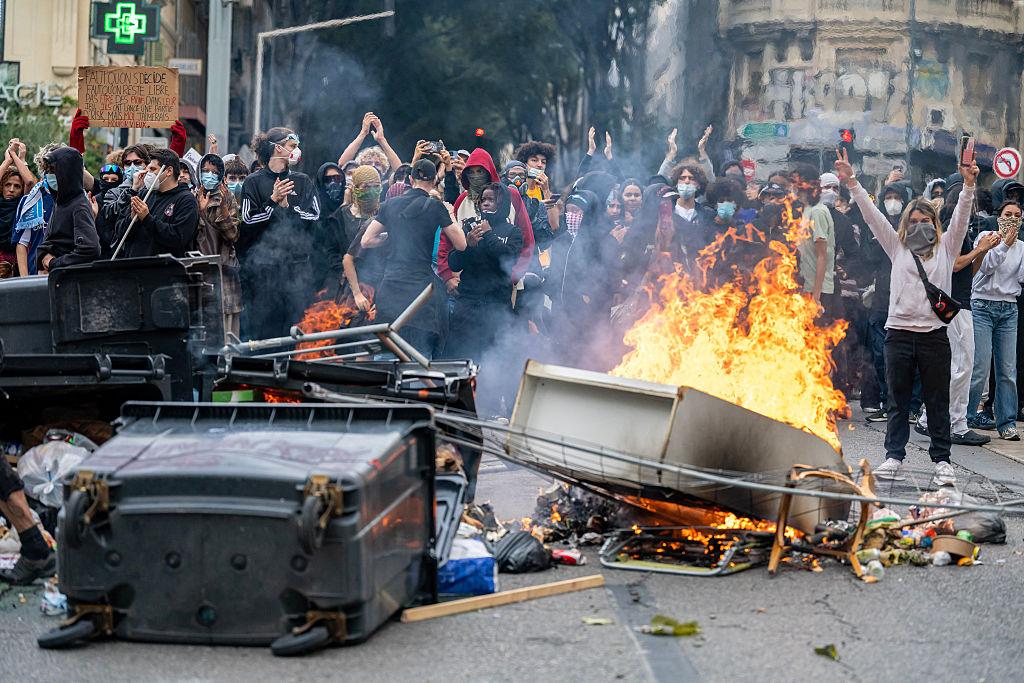
France is assessing the aftermath of widespread demonstrations that escalated into violent clashes, fires and looting in several cities on Saturday, October 17, amid public anger over the cost of living, declining public services and deteriorating school conditions.
According to Reuters and The Guardian, more than 1,200 people were arrested nationwide, including 855 in Paris, while approximately 150 police officers were reported injured. Authorities said public buildings, police vehicles and commercial premises were among the targets of attacks during the unrest.
Dispute over the number of demonstrators
France’s Interior Minister, Laurent Nuñez, estimated that approximately 550,000 people participated in 110 demonstrations nationwide. The CGT trade union and other protest organisers put the total at approximately 800,000, highlighting a significant discrepancy between official and organisers’ estimates.
Although many participants marched peacefully, violent confrontations occurred in several cities as groups of individuals clashed with police and damaged property.
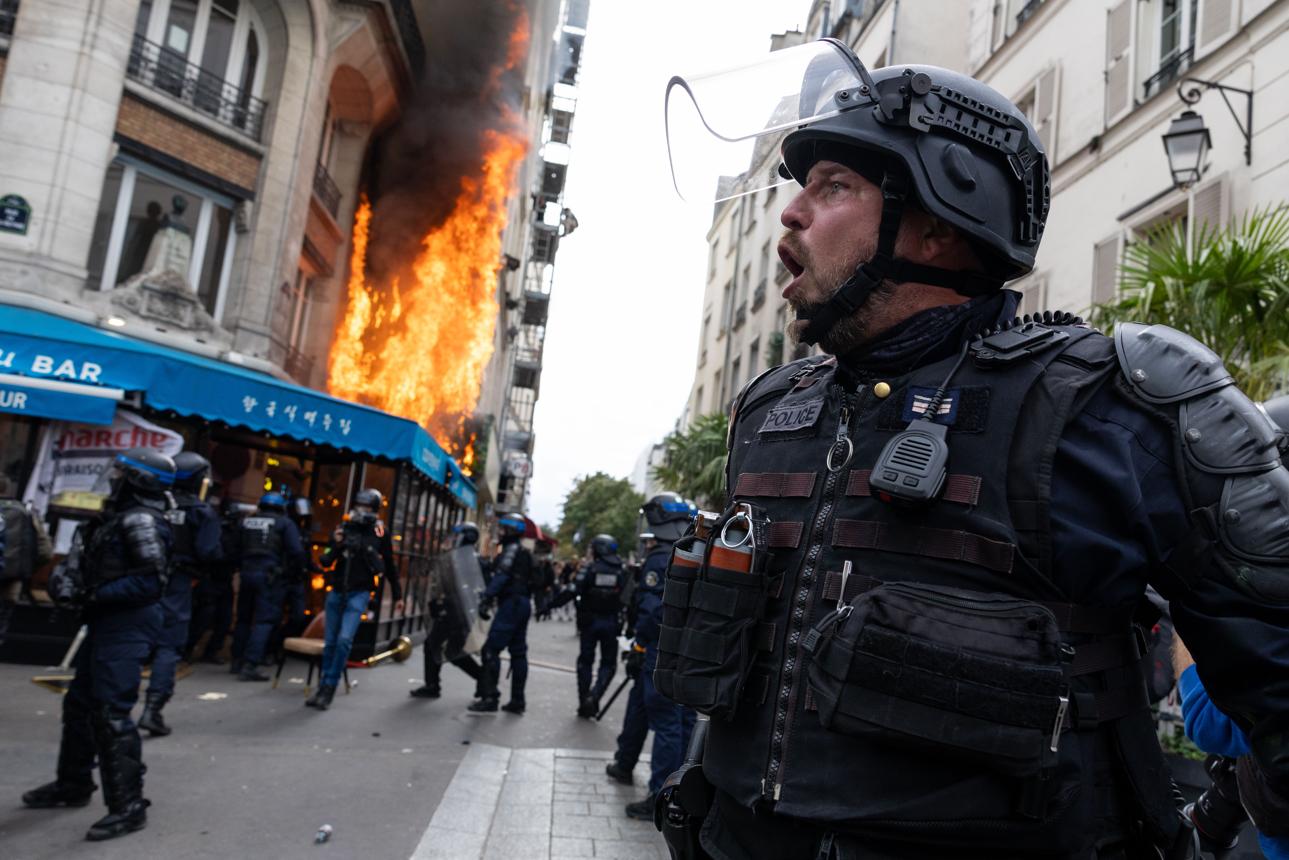
Fires and destruction reported in several cities
In Limoges, a fire severely damaged the city hall. In Marseille, protesters reportedly entered the city hall and defaced parts of the building, while in Lyon, the city’s tourist office was set on fire.
In Paris, masked individuals reportedly set vehicles alight, damaged shops and attempted to enter commercial premises. Police used tear gas during confrontations with demonstrators.
Paris Mayor Emmanuel Grégoire described the damage as extensive, while government officials condemned the violence and pledged to hold those responsible accountable.
Students’ demands at the centre of the protests
The demonstrations followed weeks of student-led protests that began in September, particularly in disadvantaged areas north of Paris. Students have raised concerns about teacher shortages, deteriorating school buildings, inadequate facilities and unequal access to educational opportunities.
The movement subsequently broadened, attracting workers, trade unions and other groups concerned about rising prices, public spending and social inequality.
The government has pledged to deploy an additional 3,000 teachers in response to concerns about staffing shortages. However, student activists have continued to demand more substantial improvements to school conditions and public investment.
Concerns over police conduct
Police tactics have also come under scrutiny following reports of serious injuries during the demonstrations.
A young demonstrator in Saint-Étienne reportedly suffered the loss of a hand during an incident involving a police grenade. Reports indicate that an investigation has been opened into the incident. The precise circumstances and responsibility remain subject to investigation.
The developments have renewed debate over the proportionality of police responses, the protection of peaceful demonstrators and the responsibility of authorities to safeguard public order without undermining fundamental rights.
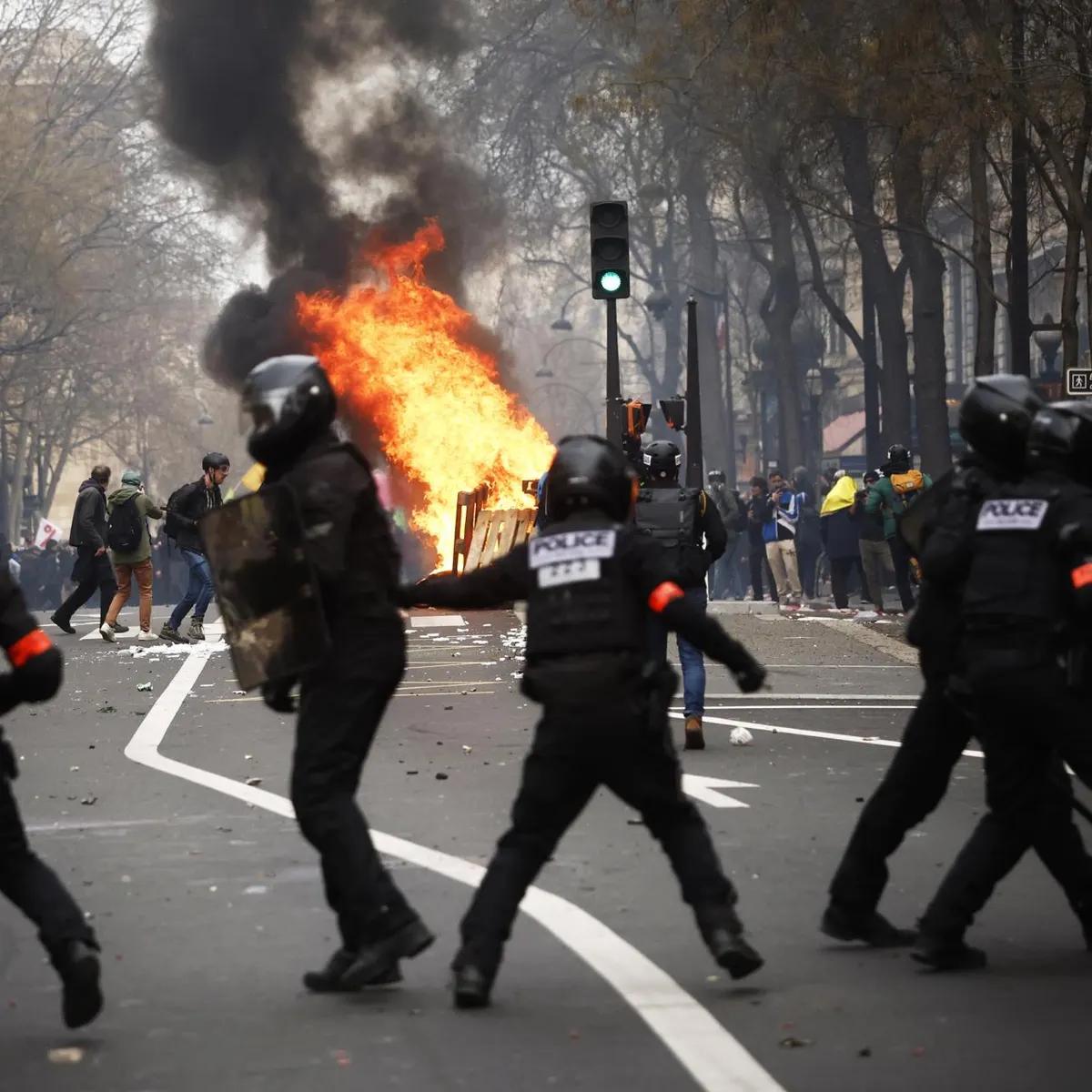
Government response and what happens next
Prime Minister Sébastien Lecornu condemned the violence and said the government would not be intimidated by those seeking to exploit demonstrations to damage public institutions. President Emmanuel Macron also called for accountability for attacks on public buildings and businesses.
As of Sunday, October 18, authorities were assessing the damage and monitoring whether further demonstrations would take place. The unrest has added to political pressure on the government ahead of France’s 2027 presidential election.
The situation remains fluid. Further updates are needed to establish the full extent of property damage, the number of people injured, the legal outcomes of the arrests and whether additional demonstrations will occur.